
How to Ask for the Haircut You Really Want: 5 Tips from a Barber
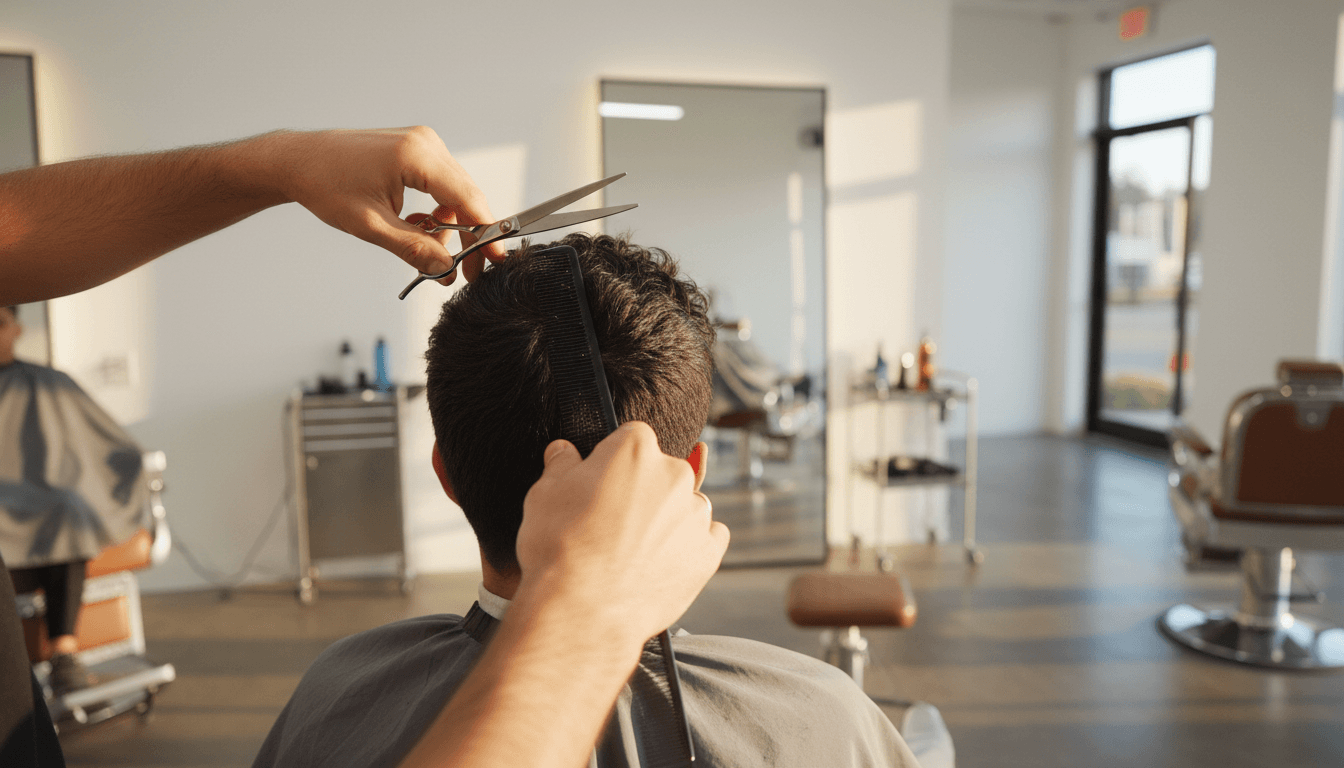
Have you ever left the barbershop feeling that it's just not quite right? Even though you showed the barber a photo and tried to describe everything, the result doesn't match what you had in mind. You're not alone; it's one of the most common problems we hear about in the chair.
The good news is, it's not your fault, nor necessarily the barber's. It's often just a miscommunication. As barbers, we spend our days trying to translate your wishes into specific movements with scissors and clippers. To help us get it right next time, I've put together a few tips on how to ask for the haircut you'll be truly happy with.
1. A Photo Is a Great Start, But It's Not Enough
Showing a photo is probably the most common way to start a conversation about a new haircut. And that's a good thing! A picture immediately tells us what style you like—whether you prefer something sleek or more relaxed, whether you want short sides or longer hair combed back. It's a thousand times better than just saying, 'A little shorter on top and use the clippers on the sides.'
But there's a catch. The man in the photo likely has a completely different hair type, head shape, and hairline than you do. He might have thick, straight hair, while yours is fine and slightly wavy. A cut that looks great on him might not work the same for you. A professional barber should point this out. Their job isn't to blindly copy a photo but to adapt that style to you personally. So, treat the photo as inspiration and a starting point for discussion, not as a precise order.
2. Tell Us What You Don't Want
This might be the most important and yet most underrated tip. We often focus on what we want but forget to mention what we want to avoid. For a barber, knowing that you 'don't want the sides completely down to the skin' is just as valuable as hearing you 'want texture on top.'
Think about your past haircuts. What bothered you about them? Were the sides too short, making you feel like your ears were sticking out? Did you dislike a transition that was too harsh? Or did you not have time in the morning to style your hair because it was too high-maintenance? Tell us. Sentences like, 'I don't want to have to blow-dry it much in the morning,' 'I don't like it when my hair falls into my eyes,' or 'Last time, the sides were shaved too close; I'd like it more natural this time' are golden for us. They help us set boundaries and better understand your preferences.
3. Don't Be Afraid to Use Your Hands (and a Few Basic Terms)
You don't need to know our barber slang; that's what we're here for. But a few basic terms and gestures can help immensely. When you talk about length, show us with your fingers. 'About this much shorter,' while showing the gap between your thumb and index finger, is much clearer than just saying 'a little shorter.' Point to your head to show where the fade should start, how far your fringe should reach, or how you want the outlines behind your ears shaped.
If you want to be more specific, here are a few words that might come in handy:
- Fade: A smooth shortening of the hair from longer to shorter, typically on the sides and back. It can be 'low' (starting low on the neck), 'mid' (starting around the temples), or 'high' (starting high on the head). A skin fade means a fade down to the bare skin.
- Texture: When you want the hair on top not to look like a solid helmet but to have structure and movement. The barber achieves this with special cutting techniques (e.g., scissor over comb, thinning shears).
- Line-up (Outline): Sharp, clean lines around the hairline, at the temples, and on the neck. It can be natural (following the hair's growth) or sharp (created with clippers or a razor).
- Taper: A subtler version of a fade, typically just at the sideburns and neckline. The hair gradually gets shorter, but not as dramatically as with a fade.
Again, you don't have to memorize this. A good barber will ask questions and guide you. But if you use any of these terms, it shows you have a clearer idea, and we'll know what to focus on.
4. Describe Your Lifestyle and Morning Routine
A haircut has to work not just the moment you leave the barbershop, but every day after. That's why it's crucial for us to know how much time and energy you're willing to dedicate to styling your hair. Be honest.
Do you get up five minutes before leaving for work and only have time to run your hands through your hair? Then a high-maintenance pompadour that requires blow-drying and pomade probably isn't for you. Do you work in an office and need to look professional, or do you have a more relaxed job where you can afford something edgier? Do you use any products? Do you blow-dry your hair? These are all pieces of information that help us recommend a cut that will be practical and serve you, not the other way around. A good barbershop in Prague should be asking you all of this.
5. Trust Your Barber and Ask Questions
Found a barbershop in Prague with good reviews and a style you like? Excellent. Now, try to trust them a little. After you've explained your idea, ask for their opinion. 'What do you think about that? Do you think it will work with my hair?' or 'Do you have any other ideas for me?'
An experienced barber has seen hundreds, if not thousands, of heads. They can predict how your hair will behave, what will flatter your head and face shape, and what's realistic given your hair's density and quality. They might suggest a small adjustment that makes a huge difference. Don't take it as criticism of your choice, but as professional advice. After all, we both have the same goal: to make you look and feel your best. Conversation is key. A good barber isn't just a craftsman; they're also an advisor.
Next time you sit in the chair, try to remember these tips. You'll see that your conversation with the barber will be much more productive. And if you're looking for a place where they listen, stop by Baza Barbershop on Arbesovo náměstí in Prague 5. We're here for you every day and are happy to discuss your ideas—whether you speak Czech, English, Russian, or Ukrainian. Book an appointment and see for yourself.